
Saudi National Day: The Story Behind September 23 and the Birth of Modern Saudi Arabia
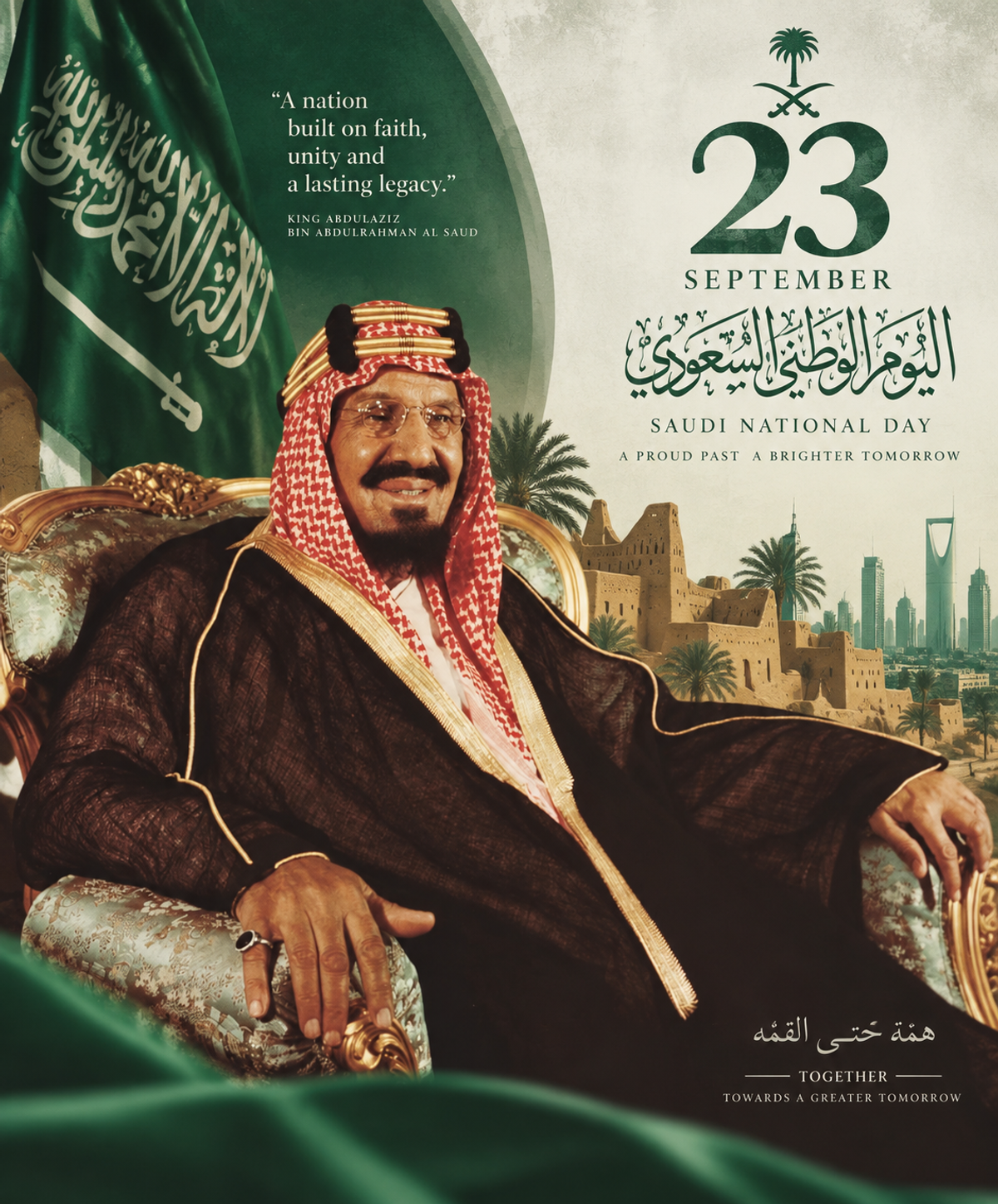
Discover why Saudi National Day is celebrated on September 23 and how King Abdulaziz united the regions that became modern Saudi Arabia
Saudi National Day: The Story Behind September 23 and the Birth of Modern Saudi Arabia
Every September 23, Saudi Arabia turns green.
Flags cover streets and buildings, celebrations take place across the country, and millions of people mark Saudi National Day.
But September 23 is more than a day of fireworks and celebrations. Behind it is a much longer story — one that stretches back centuries and explains how the modern Kingdom of Saudi Arabia came to exist.
And there are a few common misconceptions about that history too.
So, let's go back to where the story began.
Why Is Saudi National Day Celebrated on September 23?
The date takes us back to 1932.
By then, King Abdulaziz bin Abdulrahman Al Saud — widely known outside Saudi Arabia as Ibn Saud — had spent decades bringing different regions of the Arabian Peninsula under his authority.
A Royal Order announced the unification of the country under a new name: the Kingdom of Saudi Arabia.
That name officially took effect on September 23, 1932.
The date became Saudi National Day, commemorating the unification of the modern Kingdom under King Abdulaziz.
But Saudi history did not begin in 1932.
To understand the full story, we need to go much further back.
The Saudi State's History Goes Back to 1727
The roots of the Saudi state stretch back more than three centuries.
In 1727, Imam Mohammed bin Saud established the First Saudi State in Diriyah.
Diriyah became its capital and an important political center in the Arabian Peninsula.
The First Saudi State lasted until 1818.
But its fall did not mark the end of the Saudi state.
In 1824, Imam Turki bin Abdullah established the Second Saudi State and made Riyadh its capital.
The Second Saudi State continued until 1891.
Another major turning point would come just over a decade later.
King Abdulaziz Recaptures Riyadh
In 1902, Abdulaziz bin Abdulrahman Al Saud recaptured Riyadh.
This became the starting point of the process that eventually created modern Saudi Arabia.
Over the following decades, King Abdulaziz gradually expanded his authority across different parts of the Arabian Peninsula.
The process eventually brought major regions including Najd and the Hejaz — home to Makkah and Madinah — under his rule.
It was not something that happened overnight.
The process of unification stretched across roughly three decades before the Kingdom of Saudi Arabia was officially proclaimed in 1932.
Did Saudi Arabia Bring Down the Ottoman Empire?
This is where one common misconception about Saudi history appears.
The collapse of the Ottoman Empire and the creation of modern Saudi Arabia are sometimes presented as though they were one simple event.
History was considerably more complicated.
During World War I, the Arab Revolt against Ottoman rule was led primarily by Sharif Hussein bin Ali of Makkah and his Hashemite forces.
King Abdulaziz was not the leader of the Arab Revolt.
His political and military activities centered largely on establishing and expanding his authority within the Arabian Peninsula.
Meanwhile, the Ottoman Empire was facing the enormous pressures of World War I, military defeats, internal political challenges and the major geopolitical changes that followed the war.
Its eventual collapse therefore cannot reasonably be attributed to a single Arab leader, movement or event.
The rise of modern Saudi Arabia followed its own political and historical path.
The Arabian Peninsula Was Politically Complex
Another misconception comes from imagining the entire Arabian Peninsula as a single territory directly administered by the Ottoman government.
The political reality was more complicated.
Ottoman influence and administration varied significantly across the peninsula, while local rulers, tribes and regional powers also controlled or influenced different territories.
Al-Ahsa provides one example.
During King Abdulaziz's unification campaigns, Saudi forces reached Al-Ahsa in 1913, after which Ottoman forces there surrendered and departed.
Events like these show why the history of the region cannot easily be reduced to a simple conflict between two sides.
The political map of the Arabian Peninsula was constantly changing.
From Riyadh to a Unified Kingdom
After recapturing Riyadh in 1902, King Abdulaziz continued consolidating territories.
Different cities and regions came under his authority over the following years.
The process eventually included much of central Arabia and later the Hejaz.
By the early 1930s, the political landscape had changed dramatically.
A Royal Order was issued in September 1932 announcing the unification of the territories and the name Kingdom of Saudi Arabia.
The announcement took effect on Thursday, September 23, 1932.
That is the historical event Saudi National Day commemorates today.
Founding Day and National Day Are Different
Saudi Arabia has another important national occasion that can sometimes cause confusion: Founding Day.
Founding Day and National Day commemorate two different historical events.
February 22 — Saudi Founding Day
This commemorates the establishment of the First Saudi State under Imam Mohammed bin Saud in 1727.
September 23 — Saudi National Day
This commemorates the 1932 unification of the modern Kingdom of Saudi Arabia under King Abdulaziz.
In other words, Founding Day looks back to the beginning of the First Saudi State, while National Day marks the unification and naming of the modern Kingdom.
Saudi Arabia's Historical Timeline
The major events become easier to understand when placed together:
1727 — Imam Mohammed bin Saud establishes the First Saudi State in Diriyah.
1818 — The First Saudi State comes to an end.
1824 — Imam Turki bin Abdullah establishes the Second Saudi State, with Riyadh as its capital.
1891 — The Second Saudi State ends.
1902 — King Abdulaziz recaptures Riyadh and begins the process that leads to the establishment of modern Saudi Arabia.
1913 — Al-Ahsa comes under King Abdulaziz's authority after Ottoman forces leave the region.
1932 — The country's territories are formally unified and named the Kingdom of Saudi Arabia.
September 23, 1932 — The unification is officially announced, giving Saudi National Day its date.
More Than a National Celebration
Understanding that history gives September 23 a meaning that goes beyond the celebrations seen across Saudi Arabia today.
The modern Kingdom was the result of a long historical process involving multiple Saudi states, changing regional powers and decades of unification under King Abdulaziz.
Today, Saudi Arabia is also undergoing another period of major transformation.
The Kingdom remains home to Makkah and Madinah, the two holiest cities in Islam, and serves millions of Hajj and Umrah pilgrims.
At the same time, major investments in infrastructure, technology, tourism, entertainment, education and new industries are changing the country's economy and cities.
Saudi Arabia today looks very different from the Kingdom proclaimed in 1932.
But every September 23 connects the modern country back to that defining moment.
It marks the day the regions brought together under King Abdulaziz officially became known to the world as the Kingdom of Saudi Arabia.
And behind that single date lies a story stretching back more than three centuries.
Sources & References
Saudipedia — Saudi National Day
https://saudipedia.com/en/saudi-national-day
Explains the historical basis of Saudi National Day, the 1932 unification and why September 23 is commemorated.
Saudipedia — History of Saudi Arabia
https://saudipedia.com/en/history-of-saudi-arabia
Historical overview covering the First Saudi State, Second Saudi State, King Abdulaziz's recovery of Riyadh and the unification of the modern Kingdom.
Saudipedia — Saudi Founding Day
https://saudipedia.com/en/saudi-founding-day
Detailed background on Imam Mohammed bin Saud and the establishment of the First Saudi State in Diriyah in 1727.
Saudipedia — Second Saudi State
https://saudipedia.com/en/second-saudi-state
Historical overview of the Second Saudi State, established by Imam Turki bin Abdullah in 1824 with Riyadh as its capital.
Saudipedia — Timeline of the Unification of Saudi Arabia
https://saudipedia.com/en/timeline-of-the-unification-of-saudi-arabia
Timeline covering King Abdulaziz's campaigns beginning with the recovery of Riyadh in 1902 and subsequent stages of unification.
Saudipedia — Unification of Saudi Arabia
https://saudipedia.com/en/unification-of-saudi-arabia
Detailed account of the unification process and the Royal Order naming the country the Kingdom of Saudi Arabia, effective September 23, 1932.